

TL;DR:
- Embroidery is dominant in streetwear because it provides tactile permanence, signals quality, and conveys cultural identity through symbolic iconography. Its durability and textured craftsmanship create a premium perception that outlasts flat printing, making it ideal for limited drops and community signaling. Rooted in punk and military history, embroidery’s authenticity and expressive potential ensure its continued relevance in high-quality, meaningful streetwear designs.
Embroidery is the dominant decorative technique in streetwear because it delivers tactile permanence, premium perception, and identity-signaling power that no flat print can replicate. Where screen printing sits on top of fabric, embroidery is stitched through it, making the design structurally part of the garment. That difference is everything in a culture built on authenticity. Brands like Supreme, Stüssy, and Carhartt WIP have long used embroidered logos to communicate quality and cultural alignment without saying a word. This article breaks down exactly why embroidery in streetwear works so well, from its subcultural roots to its production economics.
Why embroidery is popular in streetwear: identity and storytelling
Streetwear has always operated as a visual language. The clothes you wear signal your crew, your values, and your cultural references, often without a single word. Embroidery fits this system perfectly because patches communicate identity through symbolic visual design rather than explicit text. A dragon stitched on a chest, a skull on a sleeve, or a city code on a cap tells a story the moment someone sees it.
Embroidered patches specifically carry a weight that printed graphics rarely achieve. They echo military insignia, punk battle jackets, and underground club badges, all of which used embroidery to mark belonging and rank. When a streetwear brand places an embroidered patch on a hoodie or bomber jacket, it borrows that entire visual history. The garment becomes a wearable belief system.
“Embroidery’s ability to communicate identity through iconography rather than explicit messaging makes it uniquely suited to streetwear’s cultural language.” — Artist Embroidery
The storytelling function of embroidery also creates collectibility. Patches become brand assets in limited drops and collaborations, functioning as durable visual timestamps that consumers hold onto and trade. This is why brands use embroidery to anchor their most significant releases. The technique signals that a piece is worth keeping.
Key symbols embroidery communicates in streetwear:
- Rebellion: Skull motifs, anarchist symbols, and anti-establishment iconography borrowed from punk culture
- Exclusivity: Limited-run patches that mark a specific drop or collaboration
- Community: City codes, crew logos, and collective insignia that signal group membership
- Craftsmanship: The raised texture itself reads as proof of effort and quality
How embroidery compares to screen printing in streetwear
The practical case for embroidery over screen printing is straightforward. Embroidery lasts the garment’s lifetime without fading, cracking, or peeling, while screen prints typically show visible wear after 40 to 80 washes. For streetwear consumers who wear their pieces hard and wash them regularly, that durability gap is significant.
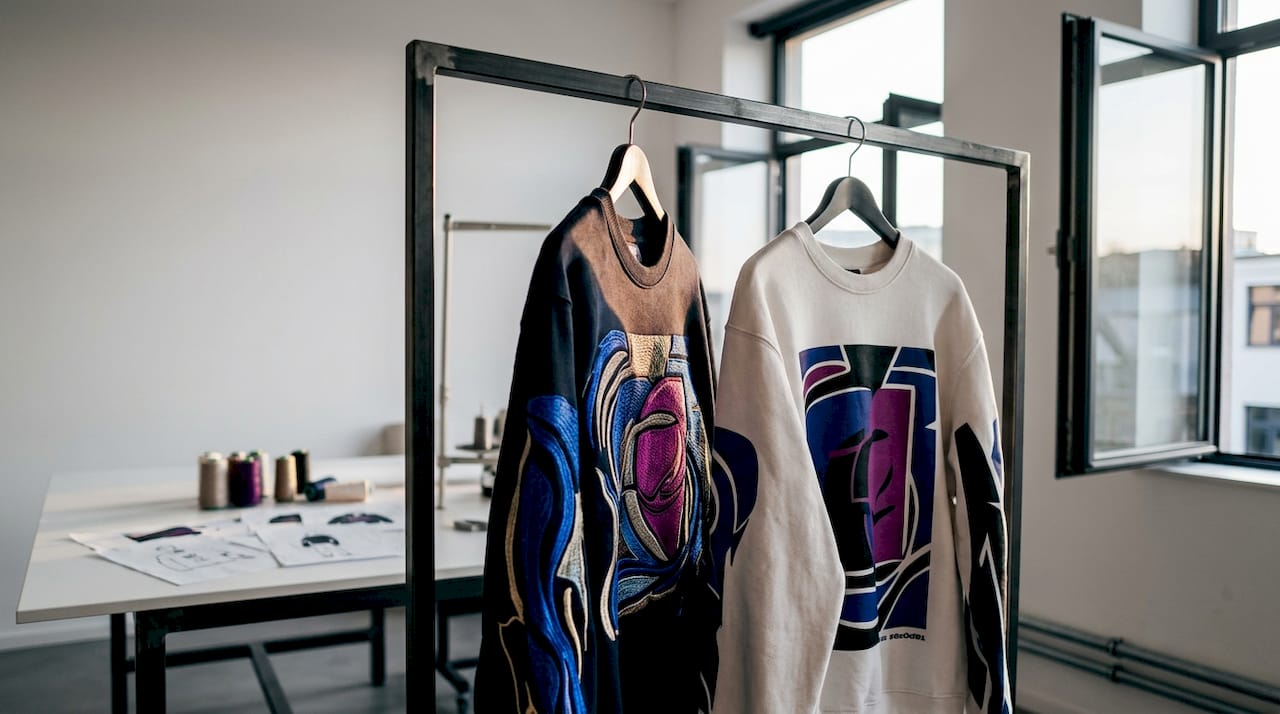
The tactile dimension matters just as much as longevity. Embroidery’s raised texture conveys craftsmanship physically. You can feel it. That sensory quality enhances perceived value in a way that a flat ink print simply cannot, which is why embroidery consistently reads as more premium across both streetwear and corporate branding contexts.
Fabric choice amplifies this effect. Heavyweight garments support embroidery cleanly, preventing the puckering and distortion that can occur on lightweight fabrics. A 480gsm hoodie provides the stable base that lets stitches sit flat, feel comfortable, and signal quality at a glance. Lightweight tees require more careful stitch density management to avoid the same problems.
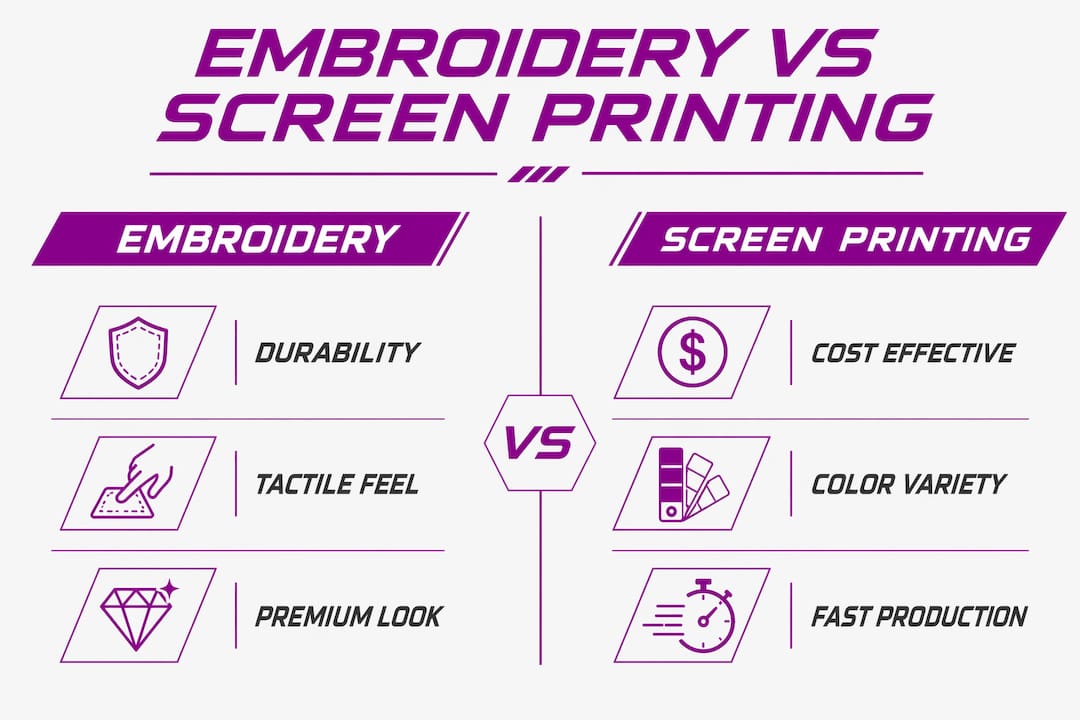
| Feature | Embroidery | Screen printing |
|---|---|---|
| Durability | Lasts garment lifetime | Fades after 40 to 80 washes |
| Texture | Raised, tactile, three-dimensional | Flat, smooth, surface-level |
| Fabric compatibility | Best on heavyweight fabrics | Works on most fabric weights |
| Perceived value | Premium, craft-forward | Standard, accessible |
| Cost per unit | Higher upfront | Lower upfront |
| Long-term value | Superior cost-per-wear | Decreases with wash cycles |
The screen printing comparison makes one thing clear: screen printing wins on upfront cost and color complexity, but embroidery wins on longevity and premium perception. For brands positioning themselves above fast fashion, that trade-off consistently favors embroidery.
Pro Tip: If you are choosing between the two techniques for a flagship piece, go embroidery. Save screen printing for high-volume, lower-priced items where cost efficiency matters more than perceived craftsmanship.
What embroidery techniques do streetwear brands actually use?
Not all embroidery looks or functions the same. Streetwear brands select specific techniques based on the visual statement they want to make and the garment they are working with.
-
Direct embroidery: Stitches are sewn directly into the garment fabric. This creates a clean, integrated look that ages well and feels subtle. It works best for chest logos, sleeve details, and wordmarks where precision matters more than drama.
-
Puff embroidery: A foam underlayer sits beneath the stitching, creating a three-dimensional raised effect. Puff embroidery is bold and immediately eye-catching, which is why it dominates cap branding and statement chest pieces. It signals confidence and scale.
-
Patch embroidery: Designs are stitched onto a separate fabric backing and then applied to the garment. Patches offer flexibility because the same design can appear on jackets, bags, caps, and tees without re-digitizing. They are also collectible on their own, which adds a secondary market dimension to the product.
Placement and stitch density shape how a piece reads as much as the design itself. A small embroidered logo on the chest reads as refined and understated. A large back piece reads as a statement. Brands calibrate both to match the positioning of each drop. Getting this wrong, such as placing a dense design on a lightweight fabric, produces a stiff, uncomfortable garment that undermines the premium signal the embroidery was meant to create.
Mixing techniques across a single collection allows brands to build layered visual narratives. A hoodie might carry direct embroidery on the chest and a puff-embroidered logo on the sleeve, creating depth without overwhelming the garment.
What does embroidery actually cost streetwear brands?
Embroidery costs are driven primarily by stitch count and digitizing setup fees, not by thread color or design complexity alone. Small logos under 5,000 stitches cost roughly $2 to $4 per piece, while large back designs exceeding 15,000 stitches range from $8 to $12 per piece for embroidery alone. Digitizing, the process of converting artwork into machine-readable stitch files, adds a one-time setup fee that gets amortized across the production run.
This cost structure creates a clear strategic implication. Small runs carry higher per-unit costs because the digitizing fee is spread across fewer pieces. At 48 or more units, volume discounts begin to reduce the per-unit price meaningfully. Brands that understand this use volume strategically to protect margins while maintaining the premium positioning that embroidery signals.
The streetwear pricing guide at Phazewrld explains this dynamic well: higher production costs justify higher retail prices, and consumers who understand craftsmanship accept that premium. The cost-per-wear calculation also favors embroidery. A $120 embroidered hoodie that lasts five years costs less per wear than an $80 screen-printed piece that degrades after two.
Pro Tip: When planning a new drop, finalize your embroidery design completely before digitizing. Every revision after digitizing adds cost. One clean file, one fee.
For brands looking at custom apparel pricing for resale, embroidery’s higher upfront investment is offset by the ability to charge more at retail and the reduced return rate that comes with durable, quality-perceived products.
How embroidery’s history connects to streetwear’s DIY roots
Embroidery’s cultural authority in streetwear is not accidental. It is inherited. Military and organizational patches evolved through the 1970s and 1980s from institutional rank markers into DIY tools of rebellion and personal expression. Punk subculture adopted the patch format and turned it into a statement of anti-establishment identity, stitching band logos, slogans, and symbols onto jackets as a form of wearable protest.
Streetwear absorbed this lineage directly. The culture’s founding ethos, which centers on self-authored identity and subcultural credibility, maps perfectly onto what embroidery has always communicated. When you stitch something onto a garment, you are claiming it. You are marking it as yours.
This history adds layers of meaning that go beyond decoration:
- Embroidered garments connect wearers to a lineage of subcultural resistance and self-expression
- The DIY origin of patch culture gives modern streetwear embroidery an authenticity that manufactured prints lack
- Collecting embroidered pieces mirrors the patch-collecting behavior of punk and military communities, creating community bonds around shared objects
- The permanence of embroidery mirrors the permanence of the values it represents: loyalty, identity, and belonging
Understanding this history also explains why streetwear authenticity is so tied to craft signals. Consumers in this space are culturally literate. They recognize when a brand is borrowing subcultural currency versus actually earning it. Embroidery, done well on the right garment, earns it.
Key takeaways
Embroidery dominates streetwear because it combines tactile permanence, cultural authority, and identity-signaling power that flat printing techniques cannot match.
| Point | Details |
|---|---|
| Identity through iconography | Embroidered symbols communicate values and subcultural belonging without words. |
| Durability advantage | Embroidery outlasts screen printing significantly, surviving the garment’s full lifespan. |
| Fabric pairing matters | Heavyweight blanks prevent distortion and reinforce the premium perception embroidery creates. |
| Cost scales with volume | Digitizing fees are fixed; larger runs reduce per-unit cost and protect brand margins. |
| Cultural roots run deep | Embroidery’s punk and military lineage gives streetwear pieces authentic subcultural weight. |
Why embroidery will always belong in streetwear
From where Phazewrld sits, the conversation about embroidery in streetwear is not really about technique. It is about what consumers are actually buying when they pick up a piece. They are not buying thread. They are buying proof that someone cared enough to do it right.
What strikes me most is how embroidery solves a problem that every streetwear brand eventually faces: how do you signal quality without explaining it? You cannot put a paragraph on a hoodie. But a raised, perfectly stitched logo on a 480gsm fleece says everything in about two seconds. Consumers feel it before they consciously process it.
The brands that get this right, the ones that build lasting credibility, treat embroidery as a design decision, not a decoration decision. They choose the technique, placement, and garment weight together. They understand that puff embroidery on a thin tee looks cheap, while direct embroidery on a heavyweight hoodie looks like a statement.
The future of embroidery in streetwear will likely involve sustainable thread materials and tech-integrated designs, but the core appeal will not change. Young consumers are moving away from disposable fashion and toward pieces that last and mean something. Embroidery sits at the exact intersection of those two demands. It is permanent, it is expressive, and it is impossible to fake.
— Phazewrld
Explore embroidered streetwear at Phazewrld
Phazewrld builds every piece around the idea that what you wear should say something real. The embroidered collections for men’s streetwear and women’s streetwear feature heavyweight blanks, precise stitch placement, and designs that carry actual cultural weight. From puff-embroidered caps to direct-stitched chest logos on premium hoodies, every detail is chosen to hold up over time and look better with wear. If you want pieces that communicate without shouting, the embroidered hoodie collection is the right place to start. Free shipping on orders over $99, easy returns, and price matching make the decision straightforward.
FAQ
Why is embroidery so popular in streetwear right now?
Embroidery communicates craftsmanship, identity, and subcultural credibility through tactile, permanent design. Streetwear culture values authenticity, and embroidery’s raised texture and durability signal quality in a way flat prints cannot.
How long does embroidery last compared to screen printing?
Embroidery lasts the full lifetime of the garment without fading or cracking. Screen prints typically show visible wear after 40 to 80 washes, making embroidery the stronger choice for long-term value.
What fabrics work best for embroidered streetwear?
Heavyweight fabrics, such as 480gsm cotton fleece, provide the stable base embroidery needs to sit cleanly without puckering. Lightweight fabrics can distort under dense stitching and undermine the premium look.
Is embroidery more expensive than screen printing?
Yes. Small embroidered logos cost $2 to $4 per piece, while large back designs can reach $8 to $12 per piece, plus a one-time digitizing fee. The higher cost is offset by superior durability and higher perceived value at retail.
What is puff embroidery and why do streetwear brands use it?
Puff embroidery uses a foam underlayer beneath the stitching to create a bold, three-dimensional raised effect. Streetwear brands use it on caps and chest pieces to create immediate visual impact and signal confident branding.