

TL;DR:
- Streetwear authenticity is rooted in provenance, craftsmanship, and genuine cultural connection, not just logos or hype. Validating provenance through trusted sources and community knowledge ensures respect for the culture and preserves the value of authentic pieces. True authenticity relies on ongoing cultural engagement and support, not superficial ownership or commercial success.
Streetwear authenticity gets misread constantly. Most people assume it’s about owning a Supreme box logo or dropping $400 on a hoodie with the right label. But what is streetwear authenticity, really? It runs much deeper than price tags or recognizable logos. It connects to where a piece came from, how it was made, the culture it represents, and whether the brand behind it actually lives that culture or just borrows the aesthetic. If you’re trying to understand streetwear beyond the hype, this guide breaks down every layer of what makes something genuinely authentic.
Table of Contents
- Key Takeaways
- What streetwear authenticity really means
- The three pillars that define authentic streetwear
- How to spot authentic streetwear today
- Why authenticity matters for community, identity, and value
- Practical tips for buying and supporting authentic streetwear
- My honest take on what authenticity really costs
- Shop streetwear that actually means something
- FAQ
Key Takeaways
| Point | Details |
|---|---|
| Authenticity goes beyond logos | Real streetwear authenticity is rooted in provenance, craft quality, and cultural respect. |
| Origins shape the standard | Streetwear’s roots in hip-hop, skateboarding, and DIY culture set the original rules for what counts as authentic. |
| Technology helps verify pieces | AI-based tools like Entrupy can authenticate items with measurable accuracy alongside community knowledge. |
| Cultural context matters most | Brands that originate from real communities earn more trust than brands that perform culture from the outside. |
| Authenticity protects your investment | Authentic pieces hold and grow resale value, while replicas lose buyer confidence over time. |
What streetwear authenticity really means
Streetwear didn’t start in boardrooms or fashion houses. It grew out of skateparks in California, hip-hop communities in New York, and surf culture along the coasts in the late 1980s and early 1990s. The people who built this culture weren’t waiting for approval from the fashion industry. They were printing their own T-shirts, trading gear, and wearing what reflected their lives.
In that context, authenticity in street culture meant something specific. It meant you were part of the community, not just adjacent to it. Your clothes told a story about where you spent your time, who you knew, and what you cared about. A hoodie from a local skate shop carried more weight than anything sold at a mall, because the shop was embedded in the scene.
The DIY ethos was central to all of it. Early brands like Stüssy were made by people who were already surfing and skating. The clothes weren’t designed for outsiders looking in. They were designed as communication between people who shared a lifestyle. That’s why streetwear culture meaning, at its foundation, was never really about the garment alone. It was about proof of membership in something real.
Authenticity, then, was judged socially before it was judged commercially. The culture had its own gatekeeping, and it was based on genuine participation, not purchase history.
The three pillars that define authentic streetwear
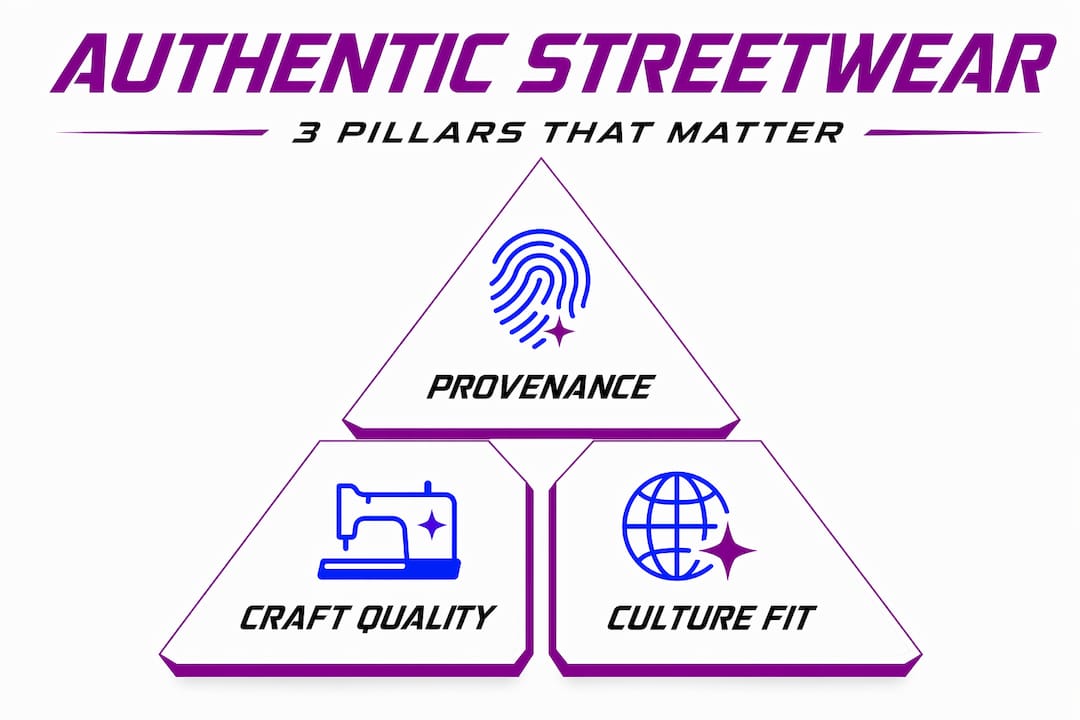
Understanding what makes streetwear authentic comes down to three overlapping pillars. None of them works alone. Replicas can fake one, sometimes two. But faking all three simultaneously is where they fall apart.
Provenance
Provenance is the chain of custody for a piece. It asks: where was this made, who sold it, and how did it get to you? Streetwear authenticity involves provenance as a record, including verified sales, original receipts, and increasingly, digital credentials tied to a specific item. Buying directly from an official drop, a verified reseller, or a platform with buyer protection gives you a documented provenance trail.
Emerging technologies are making this even more concrete. Digital provenance tools like blockchain-backed ownership records and NFT certificates are now linking physical streetwear pieces to secure digital histories, so a hoodie can carry verifiable proof of every hand it passed through.
Craft and material quality
The physical details of a garment are where most fakes get exposed. Authentic pieces show consistency in stitching and packaging, with material weight and hardware that match the original production run. A replica might copy the print on the front, but it will often use cheaper fabric, irregular stitching, or wrong-size hardware.
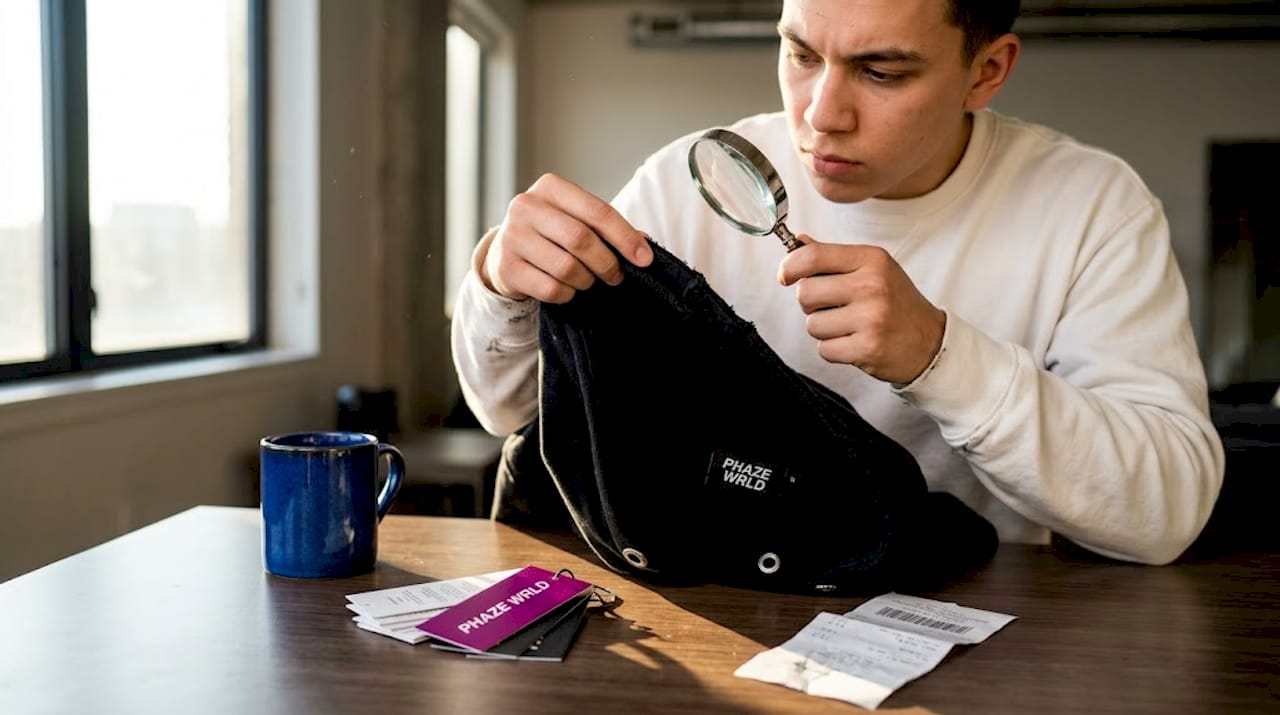
Here’s a practical comparison between authentic pieces and replicas:
| Factor | Authentic piece | Replica |
|---|---|---|
| Material weight | Matches documented specs | Often lighter or inconsistent |
| Stitching | Clean, consistent, era-accurate | Irregular, off-color, or loose |
| Packaging | Original tags, inserts, and bags | Missing or poorly reproduced |
| Provenance | Verified purchase or ownership trail | Untraceable or fabricated |
| Resale potential | Holds or grows in value | Suppresses buyer trust and price |
Cultural context
This is the pillar most people skip. A brand can produce a technically perfect garment and still lack authenticity if it has no real connection to the community it’s referencing. Culturally rooted brands originate from within real communities rather than drawing distant inspiration. When a brand is founded by someone who grew up in that scene, collaborates with people from that world, and contributes back to it, the cultural context is genuine.
Consumers pick up on the difference faster than brands expect. When a brand “performs culture” without living it, the community notices. And that recognition travels fast.
Pro Tip: When researching a brand’s cultural background, look at who they collaborate with and who was part of building the brand. Authentic streetwear collaborations involve people who are already credible within the culture, not just famous faces hired for reach.
How to spot authentic streetwear today
Modern authentication uses two complementary approaches. One is technology-driven and objective. The other is social and cultural, and both matter for building a full picture.
On the technology side, Entrupy’s AI authentication achieves 99.86% accuracy by using microscopic imaging and machine learning trained on over 50 million reference images. The process takes under five minutes and comes with a one-year financial guarantee if the result is wrong. What makes AI verification so powerful is that it identifies microscopic fabric textures and print alignment patterns that no human eye can catch, especially as counterfeiters get more sophisticated.
But technology alone won’t tell you if a piece is culturally authentic. That’s where community knowledge comes in.
Here’s what you should be checking beyond the physical garment:
- Purchase source: Did the piece come from an official drop, an authorized retailer, or a verified reseller? A documented purchase source is the first line of provenance.
- Social signals: Does the seller have a visible history in the community? Authenticity is socially judged by whether someone’s choices reflect genuine cultural understanding.
- Release-specific details: Tags and hardware vary across production runs and release years. Authentication must consider release-specific context rather than just checking for a label. A missing tag from a specific era does not automatically mean fake.
- Brand history: Does the brand have documented roots in the culture it’s selling? Is it run by people from within that community?
Pro Tip: Use authentication apps as a starting point, not a final verdict. Pair tech verification with provenance research and community knowledge for the most reliable picture of a piece’s legitimacy. You can also check cop strategies for exclusive drops to understand how to access pieces through channels that already include authenticity assurance.
Why authenticity matters for community, identity, and value
The importance of streetwear authenticity isn’t just about avoiding fakes. It shapes who you are within the culture and how the culture functions as a whole.
-
It signals real belonging. Wearing something authentic within streetwear circles communicates that you understand and respect the culture. It’s a form of cultural literacy. Limited editions and cultural movement connections are how authentic streetwear identity gets expressed. The piece is a marker of shared values, not just style.
-
It separates authentic fans from hypebeasts. A hypebeast chases exclusivity for status. An authentic streetwear fan chases pieces because of what they represent culturally. The difference shows in what someone buys, how they talk about it, and who they credit when they wear it. Authenticity isn’t about being anti-hype. It’s about having a reason beyond hype.
-
It protects your investment. Authentic pieces hold or grow in resale value while replicas create market noise that suppresses prices and erodes buyer confidence. If you ever plan to resell or trade within streetwear, your reputation for buying authentic is part of your credibility in that market.
-
It supports the culture itself. When you buy from brands with genuine cultural roots, you’re supporting the ecosystem that creates the culture you’re drawn to. Understanding streetwear brand authenticity is directly tied to understanding why some brands sustain cultural relevance while others burn bright and disappear.
Practical tips for buying and supporting authentic streetwear
Knowing the theory is one thing. Applying it when you’re about to spend real money is another.
- Buy from official sources first. Official drops, brand websites, and verified retailer partnerships give you automatic provenance. This is the simplest way to build a legitimate collection without complications.
- Research brand origins before buying. Sharp consumer instincts drive brand success, and knowing a brand’s actual history takes five minutes. Look for founder stories, community involvement, and whether the brand collaborates with people from within the culture it represents.
- Invest in quality over quantity. One authentic piece with documented provenance is worth more culturally and financially than five pieces that look right but lack any chain of custody.
- Use authentication services for resale purchases. When buying secondhand or from non-official sources, use AI-based authentication tools alongside provenance checks. Don’t rely on tags alone. Remember that provenance and craft context matter more than any single label or hardware detail.
- Build cultural knowledge. Read about the scenes that created the brands you love. Watch documentaries, follow credible community voices, and understand why streetwear prices vary based on provenance and cultural weight. This knowledge protects you from both fakes and from brands that are just performing culture.
Pro Tip: Before copping a vintage or resale piece, ask the seller for photos of the tags, packaging, and any receipt or drop confirmation they have. Sellers with legitimate pieces will share this without hesitation. Sellers who resist or deflect are a red flag every time.
My honest take on what authenticity really costs
I’ve been deep in streetwear culture long enough to watch it get commercialized, copied, and reclaimed multiple times over. Here’s what I’ve actually learned.
Most arguments about what is streetwear authenticity focus on the product. The hoodie is real or it isn’t. The tag checks out or it doesn’t. But the people who carry the most respect in any streetwear community aren’t the ones with the most verified pieces. They’re the ones who actually understand where the culture came from and why it exists.
What I’ve seen consistently is that superficial gatekeeping, the kind that’s only about what you own, misses the point entirely. Authenticity isn’t a certification you buy. It’s a practice. You either put in the work to know the culture, support it, and wear it honestly, or you don’t.
The harder truth is that commercial success makes this more complicated, not less. When a brand blows up, it attracts people who are there for the status, not the story. That’s when brands face their biggest test: do they hold the cultural line or chase the numbers? The brands that last are the ones that keep the community relationship genuine, even under commercial pressure.
That’s what I respect. And that’s what I’d tell anyone starting to build their streetwear identity: learn the story before you buy the shirt.
— Phazewrld
Shop streetwear that actually means something
If you’ve been building your understanding of authenticity, the next step is putting that knowledge into practice with pieces that actually back it up.
At Phazewrld, every drop is designed with street credibility and genuine self-expression at the core. From bold men’s streetwear to culturally sharp women’s collections, the focus is quality materials, real design intent, and community-rooted style. You get detailed product information on every item, free shipping over $99, and easy returns so you can shop with confidence. New drops are built for people who understand the culture, not just the hype. This is where defining your look and owning your identity actually start.
FAQ
What is streetwear authenticity in simple terms?
Streetwear authenticity means a piece is genuinely connected to its cultural origins through verified provenance, real craft quality, and respect for the community that created the style. It’s not just about having a real logo.
How do you spot authentic streetwear versus a replica?
Check the purchase source for provenance, examine stitching and material weight against documented production specs, and use AI authentication tools like Entrupy for resale purchases. Community knowledge and brand history research round out the verification process.
Why does authenticity matter in streetwear culture?
Authenticity signals real belonging within the culture, protects resale value, and supports the communities that create streetwear. Pieces with genuine cultural roots hold meaning beyond fashion trends.
Can a brand be authentic even if it’s commercially successful?
Yes. A brand stays authentic by maintaining its cultural relationships and community involvement even as it grows. Brands lose authenticity when they abandon their roots in favor of chasing wider markets without cultural accountability.
Is buying from official drops enough to guarantee authenticity?
Buying directly from official drops gives you verified provenance, which is the strongest single indicator of authenticity. Pair that with knowledge of the brand’s cultural background for a complete picture of what you’re owning.