

TL;DR:
- Seasonal changes challenge streetwear wardrobe versatility more than style preferences by requiring proper layering and fabric choices. A core rotation of about 10 versatile pieces, combined with understanding GSM fabric weights and the base-mid-outer layering system, ensures adaptable outfits across seasons. Building a minimal, high-quality wardrobe focused on texture, proportion, and deliberate layering helps prevent bulk and enhances year-round style efficacy.
Seasonal changes wreck more streetwear fits than bad taste ever could. You pull out your summer rotation in September and suddenly nothing works. The temperature drops ten degrees by noon, your single heavy hoodie is either too much or not enough, and buying new pieces every few months starts to feel like a tax on having style. Building solid streetwear seasonal wardrobe transitions is not about spending more. It is about knowing what you own, how to layer it, and which fabrics actually carry you through the shift.
Table of Contents
- Key Takeaways
- Build streetwear seasonal wardrobe transitions with the right foundation
- Mastering layering for streetwear seasonal transitions
- Practical strategies for transitioning between seasons
- Troubleshooting common layering mistakes
- Building a versatile, sustainable wardrobe for all seasons
- My honest take on seasonal streetwear transitions
- Step up your seasonal wardrobe with Phazewrld
- FAQ
Key Takeaways
| Point | Details |
|---|---|
| Start with a core 10-piece rotation | Around 10 foundational pieces cover 80% of your daily outfit needs across seasons. |
| Fabric weight drives transitions | Choosing the right GSM for each layer prevents overheating and keeps your fits proportional. |
| Master the base-mid-outer formula | This three-layer system gives you temperature control and visual depth without bulk. |
| Organize by front-row essentials | Keeping 25 to 40 key items front and center reduces decision fatigue and keeps seasonal swaps clean. |
| Transitions are about texture, not new silhouettes | Shifting fabric weight and texture signals seasonal change better than buying new shapes each time. |
Build streetwear seasonal wardrobe transitions with the right foundation
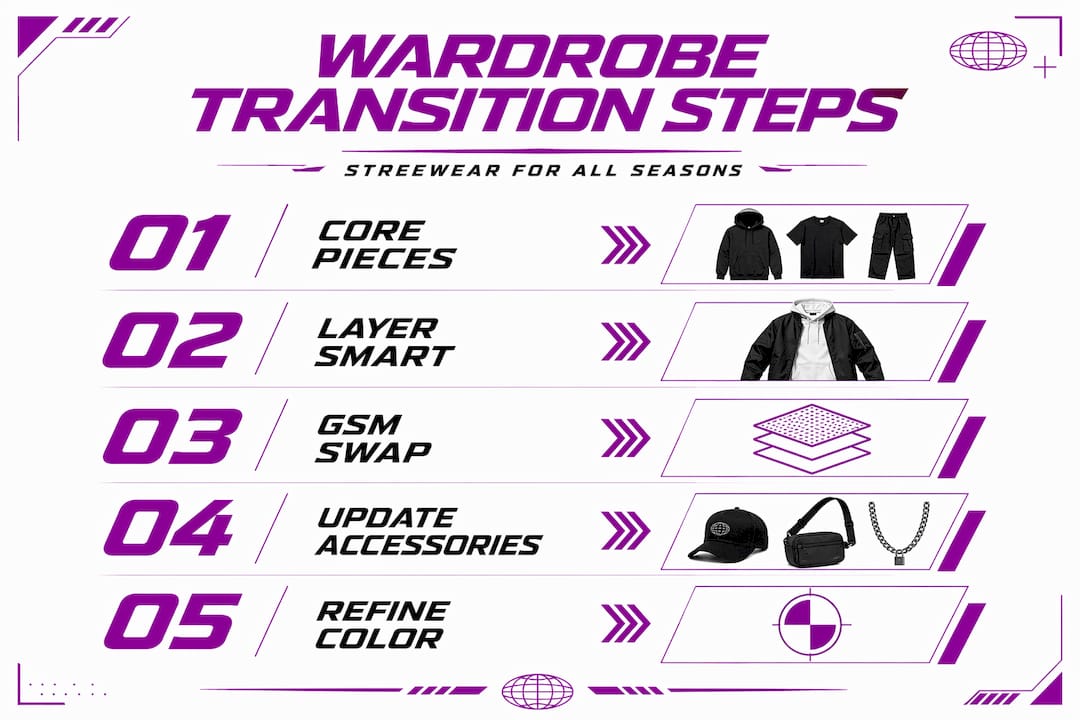
Before you touch a single hanger, you need to know what you are actually working with. Most streetwear wardrobes fail at seasonal transitions because they lack the right core pieces, not because they lack enough pieces. A core rotation of about 10 pieces covers the majority of your daily outfit needs when those pieces are chosen intentionally.
Here is what that core rotation looks like in practice:
- Heavyweight tees (two to three options in neutral or muted tones)
- A garment-dyed or pigment-dyed hoodie for mid-layer versatility
- Relaxed-fit cargo pants that work across temperatures
- A structured utility or bomber jacket as the primary outer shell
- Versatile sneakers that bridge seasons (think chunky runners or low-profile canvas)
- Long-sleeve layering tees in cotton or modal blends
- A lightweight knit or crewneck sweatshirt
- Joggers or track pants with enough structure to style up or down
- A neutral cap or beanie depending on the time of year
- Cargo shorts or transitional shorts for the warm end of the spectrum
Fabric weight is the mechanic behind all of this. GSM (grams per square meter) tells you exactly how a garment will perform across temperatures. A 120 to 150 GSM tee sits light on your skin and breathes well in summer heat. Move into the 150 to 180 GSM range and you get a piece that works through mild fall days without suffocating you. Anything 180 to 220 GSM and above is built for cold weather wear and works best as a mid or outer layer.
Cotton is your workhorse base fabric. Modal adds a softer feel with slightly better moisture management. Merino wool is the premium pick for mid-layers because it insulates without bulk and resists odor on longer wears. Lightweight knits give you texture and warmth without tipping into winter-only territory.
Pro Tip: Label your storage bins or shelf sections by GSM range, not by season. When a temperature shift hits, you will know exactly which weight category to reach for without rethinking your entire wardrobe.
Mastering layering for streetwear seasonal transitions
Layering is not just about staying warm. Done right, it builds visual depth, signals intentional styling, and makes a single outfit work from a cold morning commute through a warm afternoon. The base-mid-outer formula is the most reliable system for this.
Here is how to execute it correctly, step by step:
- Start with a breathable base layer. A 150 to 180 GSM cotton or modal tee worn directly against the skin. This layer manages moisture and sits flat under everything else. Fitted but not tight.
- Add a mid-layer for insulation and texture. A merino wool crewneck, a lightweight knit, or a pullover hoodie gives you warmth and visual weight. This is where color and texture choices start defining the outfit.
- Finish with a structured outer shell. A trench coat, utility jacket, or bomber completes the look. The outer layer should be loose enough to move over the mid without pulling or bunching, but structured enough to hold a clean silhouette.
- Balance your color palette across all three layers. Transitional styling works best when your palette shifts gradually. Earthy tones under a darker outer layer, or a light base against a heavier textured mid, both read as intentional.
- Manage your proportions deliberately. A slim base with a fitted mid and a slightly oversized outer reads clean. Three oversized layers reads messy. Let one layer do the volume work and keep the others fitted.
A mistake most people make is reaching for one thick piece instead of two thinner ones. Two thin layers outperform one heavy layer because you get better moisture management, easier temperature adjustment, and a more proportional silhouette.
Silhouette control also comes down to small tricks. The half-tuck technique defines your waistline when multiple layers would otherwise create a boxy, formless shape. Tuck the front of your tee or mid-layer slightly into your waistband on one side and let the back hang. It breaks up the vertical stack of fabric and gives your outfit a grounded, intentional look.

Pro Tip: When you add a long-sleeve under a tee, make sure the sleeve weights are close in GSM. A thin thermal under a heavyweight tee creates visible bunching at the cuffs and around the bicep. Match fabric weights within 20 to 30 GSM of each other for a cleaner result.
Practical strategies for transitioning between seasons
Transitioning your wardrobe is not a one-day overhaul. It is a gradual process that happens over two to three weeks as temperatures shift. Layering adds visual depth and silhouette contrast that makes transitional outfits feel deliberate rather than accidental.
Start by evaluating what you currently have:
- Keep pieces that layer well or anchor your core rotation
- Store anything that is season-specific and cannot pull double duty (thick parkas, sleeveless tanks in core colors)
- Swap out pieces that are worn out, no longer fit your style direction, or do not work with your current core palette
Once you know your baseline, bring in transitional items. A lightweight zip-up, an unlined denim jacket, or a long-sleeve layering tee are low-commitment additions that extend your summer pieces into fall without requiring full replacements. You can wear your everyday streetwear tees straight through fall just by adding the right layer over them.
Color and silhouette shifts signal the season even when the actual garments stay the same. Summer leans toward lighter, more saturated tones. Fall transitions naturally into earthier, more muted palettes. You do not need new clothes to make this switch. You need to pull forward the pieces in your rotation that already live in that color range.
Organizing your wardrobe by “front-row” essentials (around 25 to 40 key items you wear 90 percent of the time) and keeping seasonal extras in secondary storage prevents the classic problem of staring at a full closet with nothing to wear. Rotate your front-row items as the season shifts and leave the rest packed until they are needed.
Pro Tip: Accessories and footwear make the biggest seasonal statement with the least effort. Swapping white low-top sneakers for a darker colorway or adding a beanie to a fit you already wear signals fall without touching your actual outfit.
| Wardrobe Item | Summer Use | Transitional Use |
|---|---|---|
| Heavyweight tee | Standalone statement piece | Base layer under a light jacket |
| Garment-dyed hoodie | Evening layer | Mid-layer under a utility jacket |
| Cargo pants | Worn with tee and sneakers | Worn with long-sleeve and boots |
| Bomber jacket | Rarely worn | Primary outer layer |
| Chunky sneakers | Core footwear | Still works, paired with darker palette |
Troubleshooting common layering mistakes
Most layering problems come down to three issues: too much bulk, wrong fabric pairings, and ignoring how clothes actually move on your body. Transitional dressing works better when you focus on fabric weight and texture shifts rather than buying entirely new seasonal silhouettes.
Here is how to identify and fix the most common problems:
- Bulk without proportion: If your layered outfit looks like you added clothes without thinking, check your silhouette. One piece should carry the volume. The rest should sit closer to the body.
- Overheating indoors: You layered for cold outdoor temps but cannot remove pieces without destroying the fit. Build your layers so the mid-layer works as a standalone fit. That way, losing the outer shell still looks intentional.
- Sleeve bunching: Happens when you combine fabrics with very different weights or stretch properties. A thick cotton long-sleeve under a fitted tee creates visible bunching at every joint.
- Outerwear that only works in one scenario: A parka that only works in deep winter is a one-season piece. Prioritize outerwear that works across at least two transitional periods.
Testing layered outfits through movement is something most people skip. Sit down, reach forward, twist at the waist. If the outfit bunches badly, rides up, or restricts movement, something in the stack is not working. Catch this at home, not out in the streets.
Pro Tip: The insider approach is to layer a slim 180 GSM base with a lightweight insulating mid and a structured outer shell. This combination moves with your body and holds its shape throughout the day without adding unnecessary visual weight.
Building a versatile, sustainable wardrobe for all seasons
When you build streetwear seasonal wardrobe transitions intentionally, the payoff goes beyond looking good on a cold morning. A well-edited wardrobe with the right core pieces and a clear layering system reduces the time you spend getting dressed, the money you spend replacing things that were never really missing, and the frustration that comes from a closet full of clothes that do not connect.
The aesthetic return is real too. Balanced textures, intentional fits, and a consistent color palette across your rotation create year-round style that reads as deliberate and developed rather than reactive. You stop chasing seasonal trends and start building a wardrobe with an actual identity.
Financially, a versatile capsule wardrobe with quality pieces worn across multiple seasons delivers far more value than a drawer of trend pieces that expire with the weather. The math is simple. Ten pieces you wear 200 times each beats 40 pieces you wear five times each. Every time.
Smart layering also prepares you for the days where the weather makes no sense. When you have a reliable base-mid-outer system, a 55-degree morning and a 75-degree afternoon are just an occasion to remove a layer, not a reason to rethink your whole outfit. Refine your rotation each season, note what gaps actually show up, and invest in those specifically. That is how your streetwear wardrobe actually grows.
My honest take on seasonal streetwear transitions
I have been in the streetwear space long enough to know that most people overcomplicate transitions by treating them like fresh starts. I used to do the same thing. New season, new haul. It felt like progress but it was actually just noise.
What changed my thinking was leaning into fabric weight instead of chasing new silhouettes. Once I understood that a 180 GSM tee layered under a structured overshirt could carry me from late August through mid-November, I stopped treating fall as a shopping event and started treating it as a styling challenge. That shift saved real money and built a wardrobe that actually has a point of view.
My contrarian take: stop worrying about brand names in your transition pieces. The hoodie doing mid-layer work at 9 a.m. does not need to be a headline drop. It needs the right weight, the right fit, and the right color. Invest in those qualities first. Trends layer on top of a solid foundation. They do not replace it. Seasonal transitions are not a problem to solve by buying more. They are a design challenge to solve with what you already have.
— Phazewrld
Step up your seasonal wardrobe with Phazewrld
If you are ready to put this layering system into practice, your core pieces need to be worth building around. Phazewrld stocks exactly the kind of streetwear essentials for men and women that make transitional layering work: heavyweight tees built for base layer duty, garment-dyed hoodies at the right GSM for mid-layer warmth, and sweatpants that carry from summer nights into fall afternoons without missing a beat.

The Phazewrld catalog covers bold graphic tees, structured hoodies, and versatile sweatpants designed for movement and multi-season wear. Whether you are building your core rotation from scratch or filling the specific gaps your last seasonal audit revealed, the collections for both men and women give you quality fabrics and fits that do the layering work you need. Free shipping over $99, easy returns, and price matching mean there is no reason to compromise on the pieces your wardrobe actually needs.
FAQ
What are the best base layer fabrics for streetwear layering?
Cotton and modal are the top choices for streetwear base layers. Both breathe well, sit flat under mid-layers, and manage moisture during temperature fluctuations.
How many pieces do you actually need for a seasonal streetwear wardrobe?
Around 10 foundational pieces cover 80% of your outfit needs when chosen with layering and fabric weight in mind. Quality and versatility matter far more than quantity.
What does GSM mean for streetwear and why does it matter?
GSM stands for grams per square meter and measures fabric weight. For streetwear layering, 120 to 150 GSM suits base layers, 150 to 180 GSM works for everyday mid-weight wear, and 180 to 220 GSM is best for mid-layers and outer pieces in cooler weather.
How do you avoid looking bulky when layering streetwear?
Keep one layer doing the volume work and fit the others closer to the body. The half-tuck technique also helps define your waistline and prevents multiple oversized layers from reading as formless.
When should you swap your streetwear wardrobe for the new season?
Start the transition two to three weeks before the season fully shifts. Bring transitional pieces like lightweight jackets and long-sleeve tees to the front of your rotation rather than doing a full wardrobe overhaul at once.