

TL;DR:
- Street art provides a visual language that communicates identity and community instantly on apparel. Its bold, saturated aesthetic is enabled by screen printing technology and adopted by high fashion, exemplified by Chanel’s 2014 Graffiti Collection. Modern brands leverage street art’s participatory and remixable style to foster co-creation and cultural relevance.
Street art is defined as a public visual language that translates urban identity, rebellion, and community into bold graphic form. That same language now drives the most recognizable apparel graphics in streetwear, from spray-painted logos on luxury runway pieces to customizable fan drops by Nike and BTS. Understanding why street art shapes apparel graphics means understanding how walls became the original mood boards for fashion designers. The connection runs deeper than aesthetics. It reaches into printing technology, consumer psychology, and the way humans use clothing to signal where they belong. Brands like Phazewrld have built entire identities around this exchange between the street and the garment.
Why street art shapes apparel graphics: the core connection
Street art functions as urban visual communication, and apparel graphics work the same way. Both are designed to be read instantly, to signal identity without words, and to claim space in a crowded environment. The impact of street art on pedestrian behavior goes beyond decoration. A 2026 Springer Nature study using semi-structured interviews with 46 participants confirmed that street art makes footpaths visually engaging, serves as spatial landmarks, and creates emotional safety when well-maintained. That finding matters for fashion because it explains why people are drawn to street art aesthetics in the first place. Wearing those graphics is a way of carrying that emotional orientation with you.
“Street art works as urban behavior design, creating emotional recognition and a sense of belonging. Apparel graphics that borrow from this language tap into the same psychological response.”
The same study found that well-maintained murals actively discourage antisocial behavior and reinforce community feeling. This is not a passive effect. Street art shapes how people feel about a place, and by extension, how they feel about the culture that place represents. When a graphic on a hoodie or T-shirt echoes that visual language, it carries the same cultural weight. That is the foundational reason urban art and clothing have been inseparable since the 1970s Bronx scene gave birth to both hip-hop and graffiti simultaneously.
How printing technology made street art wearable
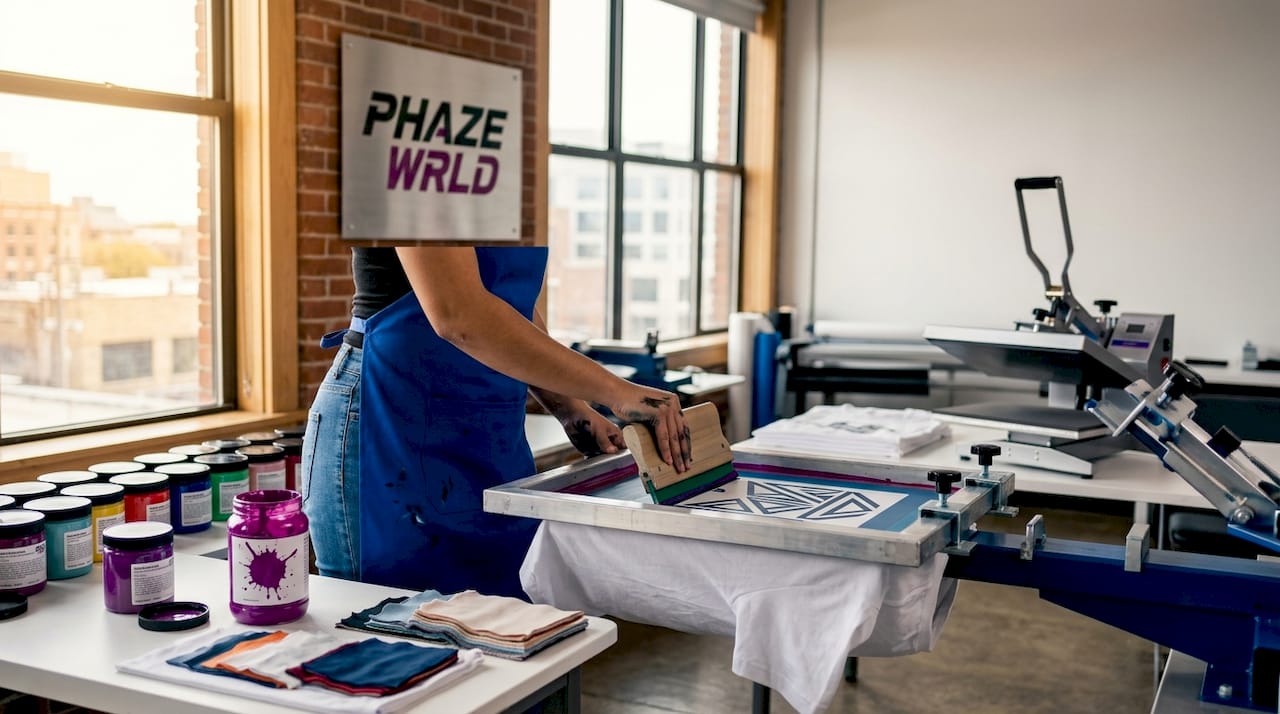
The translation of street art onto fabric required a specific technological leap, and that leap happened earlier than most people realize. Samuel Simon’s 1907 patent for the silk-screen stencil process established the mechanical foundation for reproducing bold, repeatable graphics on fabric at commercial scale. By the 1910s and 1920s, screen printing was already being adopted for fabric decoration, making street art-style graphics reproducible long before the term “streetwear” existed.
Here is why that technology was the right match for street art aesthetics specifically:
- Flat, saturated color areas. Screen printing deposits ink in solid layers, which mirrors the spray-paint technique used in graffiti and stencil work. The result is the same visual punch you see on a wall.
- Bold outlines and high contrast. The process naturally favors thick lines and strong color separation, which are defining features of Wildstyle graffiti and stencil art.
- Repeatability at scale. A single screen can produce thousands of identical prints, making it possible to mass-produce designs that look handmade and raw.
- Stencil compatibility. Street artists and screen printers both use stencils as a core tool, so the aesthetic logic of one maps directly onto the production logic of the other.
Andy Warhol’s silkscreen work in the 1960s made this connection explicit. His use of mechanical reproduction to comment on mass culture set a precedent that screen printing could carry cultural meaning, not just commercial imagery. That precedent shaped how designers began thinking about apparel graphics as statements rather than decorations.
| Technology | Street art parallel | Apparel application |
|---|---|---|
| Screen printing | Spray paint layering | Bold graphic tees and hoodies |
| Stencil cutting | Banksy-style stencil murals | Clean-edge logo prints |
| Digital direct-to-garment | Digital mural overlays | Photo-realistic urban art prints |
| Heat transfer | Paste-up street posters | Limited-run graphic patches |
Pro Tip: If you are designing apparel graphics inspired by street art, start with a two-color screen print concept. The constraint forces you to think in the same visual terms as a spray-paint artist working with limited cans.
How high fashion adopted street art aesthetics
The moment that confirmed street art’s permanent place in fashion history was Chanel’s 2014 Graffiti Collection. Karl Lagerfeld used spray-painted logos and raw canvas to create pieces that combined luxury polish with urban rebellion. The collection became a collector’s item precisely because of that tension. Sotheby’s analysis confirms that street art elements add edge and mass appeal while maintaining brand sophistication. That is a difficult balance to achieve, and street art aesthetics are one of the few visual languages capable of holding both ends simultaneously.
The Chanel Graffiti Collection also demonstrated something important about the apparel design influence of street art: it is not just about how something looks. It is about what it communicates. Graffiti carries connotations of authenticity, risk, and cultural fluency. When those connotations appear on a $3,000 jacket, they create a conversation between two worlds that neither world could have alone.
| Aesthetic element | Street art origin | Fashion application |
|---|---|---|
| Spray-painted lettering | Graffiti tags and throw-ups | Logo treatments on luxury pieces |
| Raw canvas texture | Unprepared wall surfaces | Unfinished fabric edges and exposed seams |
| High-contrast color blocking | Mural color fields | Bold panel construction in outerwear |
| Stencil imagery | Banksy, Shepard Fairey | Graphic prints on T-shirts and caps |
Celebrity culture accelerated this adoption. Artists like Kanye West, Pharrell Williams, and A$AP Rocky have consistently worn and promoted apparel that draws directly from street art visual vocabulary. Their influence pushed the aesthetic from subcultural signal to mainstream fashion grammar. Today, a graphic that would have read as underground in 2005 reads as aspirational in 2026.
Pro Tip: Study the Chanel Graffiti Collection not for the luxury price point but for the design logic. Notice how the spray-paint effect is applied to specific brand marks rather than the whole garment. That restraint is what makes it work.
What customization and co-creation owe to street art
Street art has always been participatory. A tag invites a response. A mural sparks conversation. That dynamic is now built into how major brands approach apparel personalization. Nike’s collaboration with BTS in 2026 is the clearest recent example. The Nike by You campaign offered 10 custom graphics for fans, using expressive shapes and fluid typography that directly mirror street art’s participatory nature. Fans were not just buying merchandise. They were choosing a graphic identity, the same way a street artist chooses a style.
This approach works because street art’s graphic elements function like participatory signatures, enabling brands to engage consumers in co-creation rather than passive consumption. The design language of street art is inherently remixable. Wildstyle lettering can be adapted. Stencil shapes can be recolored. Abstract forms can be scaled. That flexibility makes it ideal for personalization programs where the brand provides the visual grammar and the consumer fills in the meaning.
For young creatives, this is a practical lesson in streetwear collaborations and how they generate cultural energy. The brands that win in this space are not the ones with the most polished graphics. They are the ones whose graphics feel like they belong to the person wearing them.
- Street art’s visual vocabulary is built for adaptation, not fixed reproduction.
- Customization programs succeed when the graphic system has clear rules but open expression within those rules.
- The Nike x BTS model shows that fan engagement deepens when consumers make design choices, not just purchase choices.
- Apparel brands that understand brand equity in streetwear know that co-creation is one of the fastest ways to build it.
What street art styles actually look like on a garment
Street art is not one style. It is a family of distinct visual approaches, and each one translates differently onto fabric. Understanding these styles is what separates designers who use street art thoughtfully from those who just slap a spray-paint texture on a shirt.
The major styles and their apparel applications break down this way:
- Wildstyle graffiti. Interlocking, angular letterforms with arrows and extensions. On apparel, this appears as complex typographic graphics on the back of jackets or across the chest of oversized tees. The visual density rewards close inspection.
- Stencil art. Clean-edged imagery cut from a template and applied in one or two colors. Banksy popularized this globally. On garments, stencil-derived graphics appear as sharp, high-contrast prints that read clearly at a distance. They work especially well on caps and hoodies.
- Abstract shapes and color fields. Influenced by abstract expressionism and mural painting, these graphics use large color areas and gestural marks. On apparel, they appear as all-over prints or bold panel graphics that treat the garment as a canvas.
- Character art. Cartoon-influenced figures with exaggerated proportions, common in New York and Los Angeles street art traditions. On clothing, character graphics create immediate personality and are highly shareable on social media.
The diversity of street art styles is precisely what keeps apparel graphics fresh. Each style carries different cultural associations, different historical roots, and different visual energy. A designer who understands the difference between a throw-up and a stencil piece is working with a much richer toolkit than one who treats “street art” as a single aesthetic. For stencil art specifically, the visual language translates with particular clarity onto fabric because the production logic of stenciling and screen printing are nearly identical.
Key takeaways
Street art shapes apparel graphics because it provides a proven visual language for communicating identity, community, and cultural authenticity at a glance.
| Point | Details |
|---|---|
| Street art as emotional design | Springer Nature’s 2026 research confirms street art creates safety and belonging, the same signals apparel graphics aim to project. |
| Technology as the enabler | Screen printing, patented in 1907, gave designers the tools to replicate street art’s bold, saturated aesthetic at commercial scale. |
| Luxury validation | Chanel’s 2014 Graffiti Collection proved street art aesthetics can carry both cultural edge and high-fashion credibility simultaneously. |
| Co-creation as strategy | Nike x BTS used street art’s remixable graphic logic to turn apparel customization into fan engagement and brand loyalty. |
| Style diversity drives longevity | Wildstyle, stencil, abstract, and character art each offer distinct visual grammars, keeping street art-inspired apparel perpetually relevant. |
Street art in fashion is not a trend. It is a permanent grammar.
Here is what I have come to believe after watching this space closely: most people treat street art’s influence on apparel as a cycle, something that peaks and fades with each generation. That reading is wrong. Street art is not a trend that fashion borrows from. It is the visual grammar that urban fashion speaks natively. The reason is structural. Street art and apparel graphics solve the same problem: how do you communicate identity in a public space where you have about three seconds of attention? Both answer that question with bold color, strong contrast, and imagery that carries cultural meaning without requiring explanation.
What is changing is the technology layer. Digital direct-to-garment printing now allows photo-realistic mural-quality graphics on a single T-shirt without a screen. Augmented reality is starting to let brands layer digital street art onto physical garments through phone cameras. These tools will expand what is possible, but they will not change the underlying logic. The visual language of the street will keep shaping what goes on a garment because that language is where authenticity lives for this generation. My advice to young creatives is to study actual street art, not Pinterest boards of street art. Walk through neighborhoods with murals. Understand why a specific piece works in a specific location. That contextual understanding is what separates graphics that feel genuine from graphics that feel like costumes.
— Phazewrld
Explore street art-inspired apparel at Phazewrld
Phazewrld builds every collection around the same visual principles that make street art powerful: bold graphics, strong identity, and designs that communicate who you are before you say a word.
The streetwear T-shirts collection pulls directly from urban art aesthetics, with graphics designed to carry the same visual weight as a well-executed mural. The men’s streetwear range extends that language across hoodies, sweatpants, and headwear built for people who take their style seriously. Free shipping over $99, easy returns, and price matching mean the only decision you need to make is which graphic speaks for you. New drops land regularly, so the collection stays as current as the streets that inspire it.
FAQ
Why does street art influence apparel graphics so strongly?
Street art and apparel graphics solve the same communication problem: conveying identity and cultural belonging in seconds. The visual tools of street art, bold color, high contrast, and culturally loaded imagery, are exactly what effective apparel graphics require.
What was the first major luxury brand to use street art in fashion?
Chanel’s 2014 Graffiti Collection is widely recognized as the defining moment when luxury fashion formally adopted street art aesthetics, using spray-painted logos and raw canvas to blend high fashion with urban rebellion.
How does screen printing connect street art to apparel production?
Samuel Simon’s 1907 silk-screen patent established a printing method that naturally replicates street art’s flat, saturated color and bold outlines. The stencil logic of screen printing mirrors the stencil logic of street art, making the two practices technically compatible.
What street art styles translate best onto clothing?
Stencil art and Wildstyle graffiti translate most directly onto garments because their visual characteristics, clean edges, bold lines, and high contrast, align with what screen printing and direct-to-garment technology produce most effectively.
How are brands using street art for apparel customization?
Nike’s 2026 collaboration with BTS offered fans 10 custom street art-inspired graphics through the Nike by You program, demonstrating how brands use street art’s remixable visual grammar to turn apparel into a co-creation experience.